🦄 Venture Capital 101
A beginner-friendly breakdown of how startups get funded, scale, and become unicorns.

At McMaster, we are surrounded by world-class talent - engineers, scientists, business and health students, researchers, and builders. There is no shortage of ambition here. New ideas are created every day, but many of those ideas never make it past the classroom.
Not because they aren’t good - but because there is a gap.
A gap between ambition and conviction.
A gap between students and real founders.
A gap between creativity and capital.
The McMaster Venture Capital Club (MVCC) exists to bridge that gap.
Our mission is simple:
Give students hands-on experience in how startups are built, funded, and scaled.
We don’t teach venture capital through lectures — we learn by working directly with real founders, helping early-stage startups solve real problems.
This means:
You learn how investors evaluate companies.
You learn how founders make strategic decisions.
And you contribute to real-world outcomes — not hypotheticals.
Our broader purpose is to help McMaster become a recognized hub of entrepreneurial talent - where ideas don’t just exist, they thrive.
How Venture Capital Works (The Core Concept)
If you’ve ever watched Shark Tank, you already get the basic idea.
But real venture capital operates differently.
Startups don’t go to banks for loans. Instead, they raise capital in funding rounds, each designed to support a different stage of growth:
Pre-Seed:
The idea stage. Founders are building an early prototype and validating the problem. Typical funding is $10K – $250K.
Seed:
The product is being tested with real users to prove product-market fit. Typical funding is $250K – $2M.
Series A:
The company is now scaling — growing the team, acquiring more customers, and building repeatable processes. Typical funding is $2M – $15M.
Series B & C:
The company expands into new markets, product lines, or regions. Operations and growth efforts become significantly larger. Typical funding is $15M – $50M+.
Late-Stage / Pre-IPO:
The company focuses on efficiency, profitability, and readiness for public markets or acquisition. Funding at this stage is typically $50M+.
The Lead Investor
In almost every round, one investor takes the lead.
This investor:
Sets the valuation
Negotiates the deal
Takes the biggest early risk
Once they commit, co-investors follow.
Think of it like a group project — one person does most of the heavy lifting, others support.
Unicorns + Decacorns
A unicorn is a private startup valued at $1B+.
A decacorn is valued at $10B+.
Once a company goes public, it stops being a unicorn — because its value is now set by the open market.
Why does venture capital chase unicorns?
Because one unicorn can make up for dozens of failed investments.
Example:
In 2009, Sequoia Capital invested $585K into Airbnb.
By the time Airbnb went public in 2020, that investment was worth ~$12B.
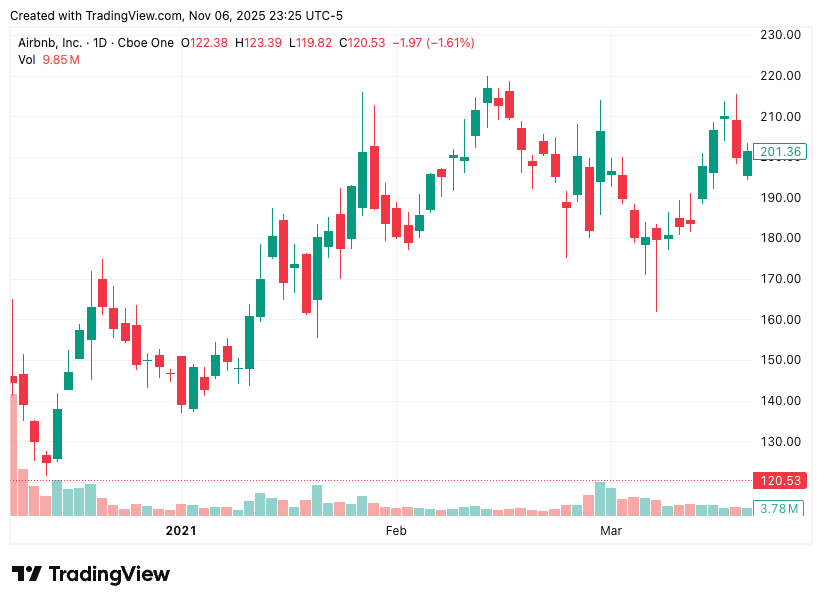
That’s why venture capital is about conviction before consensus.
Where Most Startups Fail: The Early Stage
This is where founders are still validating:
the product
the market
the business model
And this is where ~90% of startups fail, often because:
They never find product-market fit
They burn cash too quickly
Their unit economics are unsustainable
Support Systems
To help founders navigate this stage, incubators and accelerators exist.
At McMaster:
The Forge - workspace, funding, investor network
The Clinic - turns research + innovation into companies
Globally:
Y Combinator (YC) and Techstars have launched companies now worth $600B+
Airbnb, Stripe, Coinbase, Reddit? All YC companies.
MVCC will be hosting YC-backed founders this year — stay tuned.
Who Invests at Each Stage
Pre-Seed / Seed:
Investors at this stage are usually angel investors, incubators/accelerators, and micro-VC funds. They are comfortable with high uncertainty and are primarily betting on the founders.
Seed → Series B:
This is where early-stage venture capital funds invest. They look for signs of product-market fit and early growth.
Late Stage:
When a company is more mature, investment often comes from crossover funds, private equity firms, and sovereign wealth funds. These investors focus more on scale, financial performance, and path to exit.
Liquidity
Liquidity is the measure of how easily an asset can be converted to cash.
Unlike stocks, venture capital is illiquid.
When VCs invest, their money is locked up for 7–10 years, until an exit (IPO or acquisition).
Late-Stage VC, IPOs & Secondary Markets
Once a company has strong revenue + market traction, the focus shifts from risk to scale.
This is where:
Crossover Investors (hedge funds entering private markets)
Large VC Funds
Private Equity Firms
start writing checks of $50M+.
Example:
Tiger Global invested heavily in Stripe & Databricks before IPO.
IPOs
An initial public offering (IPO) is when a private company offers its shares to the public.
This is how early investors and employees finally get liquidity.
Example:
Reddit IPO’d in 2024 at a $6.5B valuation, raising ~$750M.
Secondary Markets
Private shares can also be bought/sold before IPO.
This is how Sequoia sold part of its Stripe position for ~$860M - without waiting for IPO.
Private Equity Roll-Ups
Private equity firms often buy multiple companies in the same sector and merge them to build scale.
Example:
Blackstone rolled up dozens of healthcare service companies into one platform valued at $10B+.
Pre-Money vs. Post-Money Valuation
Formula:
Pre-Money Valuation + Investment = Post-Money Valuation
Example:
Startup valued at $500K
Sequoia invests $200K
→ Post-money valuation = $700K
Famous Canadian Growth Paths
Shopify
Bootstrapped for 4 years (no outside capital)
Series A (2010): $7M led by Bessemer at a $20M pre-money valuation
Series B (2011): $15M
Series C (2013): $100M (OMERS + Insight)
Hit $1B valuation in 2013 → became a unicorn
IPO’d in 2015 at $17/share → closed at $28/share opening day
Wealthsimple
Series E (2025): $750M CAD led by Dragoneer & GIC
Valuation exceeded $10B+ → became a decacorn
How Venture Funds Are Structured
VC funds are Limited Partnerships:
RoleFunctionLPs (Limited Partners)Provide capital (pension funds, endowments, family offices, high-net-worth individuals)GPs (General Partners)Invest capital, work with founders, drive returns
VC Compensation
2% management fee
20% performance fee (carry)
Fund Lifecycle (~10 Years)
Invest (Years 1–4)
Support & Scale (Years 4–8)
Exit (Years 8–10)
Key Metrics VCs Analyze
Product-Market Fit (PMF):
Measures whether customers genuinely need and consistently use the product.
It matters because PMF is the strongest predictor of whether the company can grow quickly and sustainably.
TAM (Total Addressable Market):
Represents the total size of the market opportunity if the company captures most of its ideal audience.
It matters because a larger TAM means more potential upside and scalability.
Unit Economics:
Looks at how much profit (or loss) the company makes per customer or per transaction.
It matters because it shows whether the business can become financially sustainable as it grows.
Burn Rate:
The amount of money the company spends each month.
It matters because burn rate determines runway — how long the startup can operate before needing to raise more funding.
Valuation Methods
Market Comparables - value based on similar companies.
Exit-Based Valuation - value based on expected exit return.
Revenue Multiple Method - valuation = revenue × industry multiple.
Scorecard / Risk Factor Method - used for pre-revenue startups; adjusts valuation based on strengths/risks.
Closing Thought
Venture capital is not about predicting the future - it’s about betting on it.
At MVCC, we’re learning to think like founders and investors - not someday, but now.